Tankless Water Heater Service and Planning for Homes That Need to Know If It Really Fits
Tankless water heaters can be a strong fit in the right house, but they are not a magic answer for every hot-water complaint. When homeowners ask about tankless, they are usually trying to solve a real problem: running out of hot water, reclaiming space, improving efficiency, or replacing an aging tank with something that fits the house better.
Choose what sounds closest
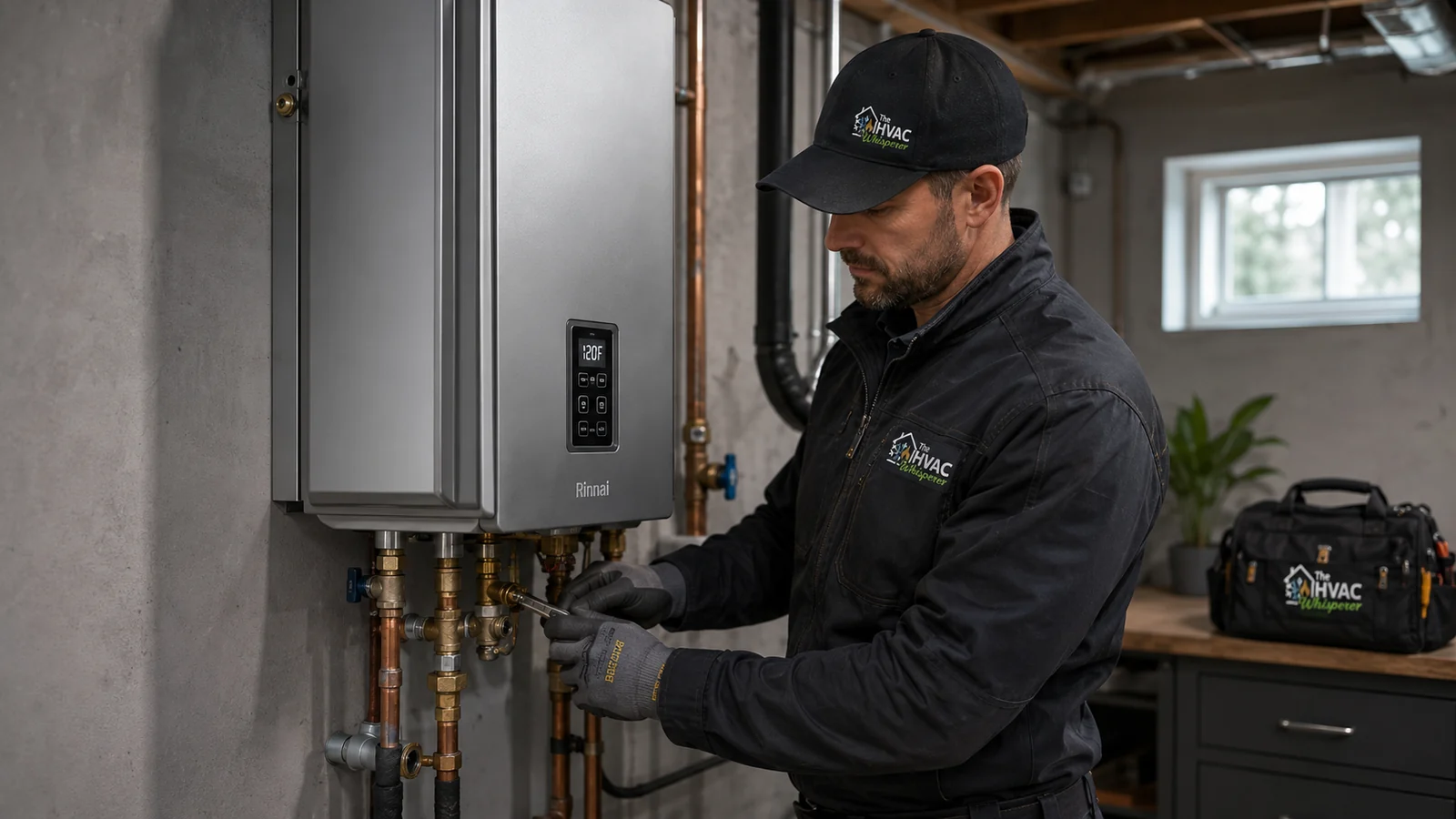
Tankless conversations fit households deciding between repair, replacement, and a different hot-water strategy. The question is not just whether tankless sounds modern. It is whether the home, the fuel, the venting, the water quality, and the household demand make it a strong fit.
Other ways this might connect
These routes are here when they match what is happening at the home.
Water Heater Installation
For replacement planning when the household needs a new water-heater path.
Water Heater Repair
For active water-heater symptoms that may still be repairable.
High-Efficiency Water Heaters
For households comparing efficient tank options against tankless.
Water Treatment
For odor, sediment, scale, or well-water concerns that affect tankless fit.
Plumbing Diagnostics
For older plumbing or utility conditions that change the installation conversation.
Request an Estimate
For the larger replacement and fit conversation.
How this helps at the house
A good tankless conversation separates expectation from fit. Some homes benefit from tankless. Others are better served by a properly selected tank or a different high-efficiency option. The useful first step is understanding what problem the household is trying to solve and what the house can realistically support.
Why the house changes the answer
Tankless fit around here is shaped by fuel availability, venting, water quality, mineral buildup, household demand, and whether the home is older, rural, seasonal, or running on well water. In some houses tankless is a clear upgrade. In others it creates a different set of tradeoffs the homeowner should understand first.
Ways to move forward
The right next step depends on urgency, age, symptoms, and what the home is actually doing.
What to expect before anything bigger
When you reach out, the useful details are how the current hot water is falling short, what kind of fuel the home uses, whether the house is on a well, how many fixtures are active at once, and whether space or venting is part of the reason tankless is being considered.
Planning water heater work?
Start with the home, the comfort problem, and what you want the new system or upgrade to solve.